How to manage recurring septic service schedules
A tank being on your customer list doesn't mean its next visit is booked. Keep the service obligation, the booking and the completed visit separate.
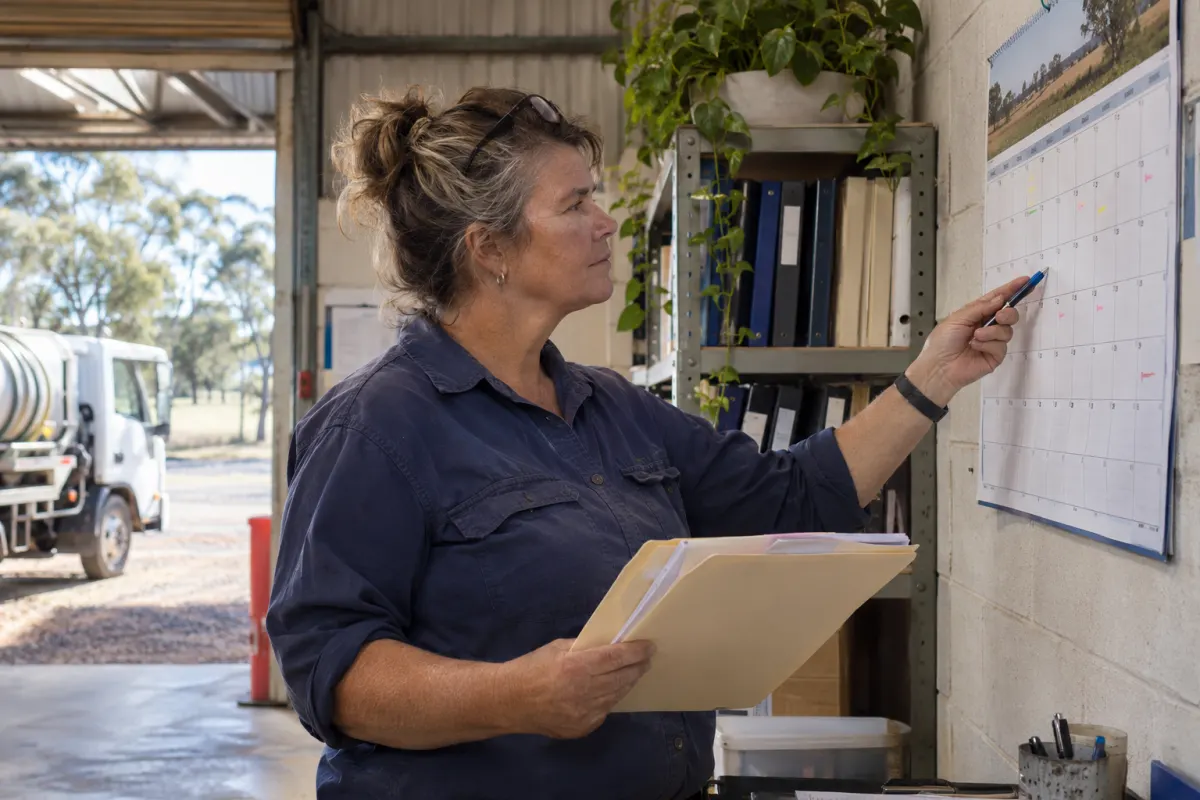
A recurring service list usually starts with a property, a last-service date and a note about when to go back. The trouble begins when that note becomes a calendar entry, then someone moves the entry and loses sight of when the work was actually due.
Keep the service date you owe separate from the appointment you’ve offered. Both matter, and they answer different questions.
Start at the system
One customer can own several properties. One property can have more than one tank or treatment system. Put the recurring requirement against the item being maintained, with a stable system number, rather than against the customer’s name alone.
For each system, record the work type, last completed date, interval or next due date, and where that requirement came from. Use the applicable approval, service agreement and manufacturer’s instructions to establish the interval. Don’t copy a familiar interval across every plant just because they’re in the same suburb.
Add the person who can arrange access. A property manager may pay the invoice while a tenant holds the gate key. Sorting that out during setup saves a phone call every time the site comes due.
Choose how dates move
There are two common patterns: a visit due on a fixed calendar cycle, and a visit calculated from the previous completion. Decide which fits each obligation before building the schedule.
Suppose a visit due in one month is completed several weeks late. Does the next visit stay on the original cycle, or move with the completion? That’s a question about the service requirement, not a calendar preference. Write the answer down and check that your software follows it.
A postponed appointment also needs a reason. No access, customer request and truck breakdown have different follow-up actions. Preserve the original due date when changing the booking so the office can see how long the work has been waiting.
Raise work before planning the week
Make future visits visible early enough to group them with nearby work. If dispatch plans three weeks ahead but recurring jobs appear only a few days before they’re due, the planner will keep sending trucks back into areas they’ve just covered.
Use a rolling list of due work, with columns for system, due date, proposed visit, assigned technician and access confirmation. A visit waiting for a technician is unfinished planning; it shouldn’t disappear simply because somebody created a draft.
Check for duplicates before generating another batch. A moved booking should remain the same visit. If you generate from both a recurring plan and a system interval, establish which source takes precedence. Otherwise the customer can get two reminders for one service.
Our guide to seasonal service workload explains how to look further ahead without filling the calendar with promises you can’t keep.
Review exceptions weekly
Start with overdue systems that have no workable appointment, then visits held up by access or a missing contact. Give each problem an owner and a next action. A red date with nobody responsible will still be red next Friday.
After the field work, reconcile completions against the schedule. Check that the right system was serviced and that the next date was updated. Failed visits need another action; they mustn’t advance the maintenance cycle as though the work was done.
Keep cancelled service agreements visible long enough to understand why the recurring work stopped. Deleting the entire history makes a later enquiry harder to answer. When an owner changes, confirm who has taken over the service before restarting messages.
Recurring work in Rangefront Waste
Rangefront Waste supports recurring plans and intervals on individual systems. The morning process raises draft visits ahead of due work, with a configurable look-ahead period. Active plans for the same work take precedence over system intervals, avoiding a second draft from that source.
Finishing a service updates its last-service date and calculates the next date from the configured interval. Check that behaviour against the cycle you need. The office still schedules the draft and assigns the crew; generating work doesn’t confirm an appointment with the customer.
Use the scheduling guide for setup, then test the full cycle with a sample system. Once the dates behave properly, set up customer reminders and check which event sends each message.