How to plan septic pump-out runs
A shorter drive helps, but a workable pump-out run also needs time at each tank, somewhere to unload and a plan for the stop that doesn't go to plan.
The nearest next job isn’t always the right next job. It might have a locked gate until midday, leave the truck needing to unload before the following stop, or require equipment that another crew is carrying.
Build the day around those constraints first. Route optimisation becomes useful once the stop list is workable.
Gather work in one list
Start with unbooked requests, repeat pump-outs coming due and unfinished stops from earlier runs. Keep the reason each job is waiting. A customer awaiting a quote isn’t ready to dispatch just because their property sits beside tomorrow’s route.
Each candidate stop needs an address, map point, work description and realistic duration. Include the tank location and access notes. If the street address points to the house but the truck enters from a side road, mark the entrance separately.
Separate firm appointments from flexible work. An owner who must meet the driver has a different promise from an unoccupied site where access is already arranged. The planner needs to know which can move before taking advantage of an apparent gap.
Count more than pumping time
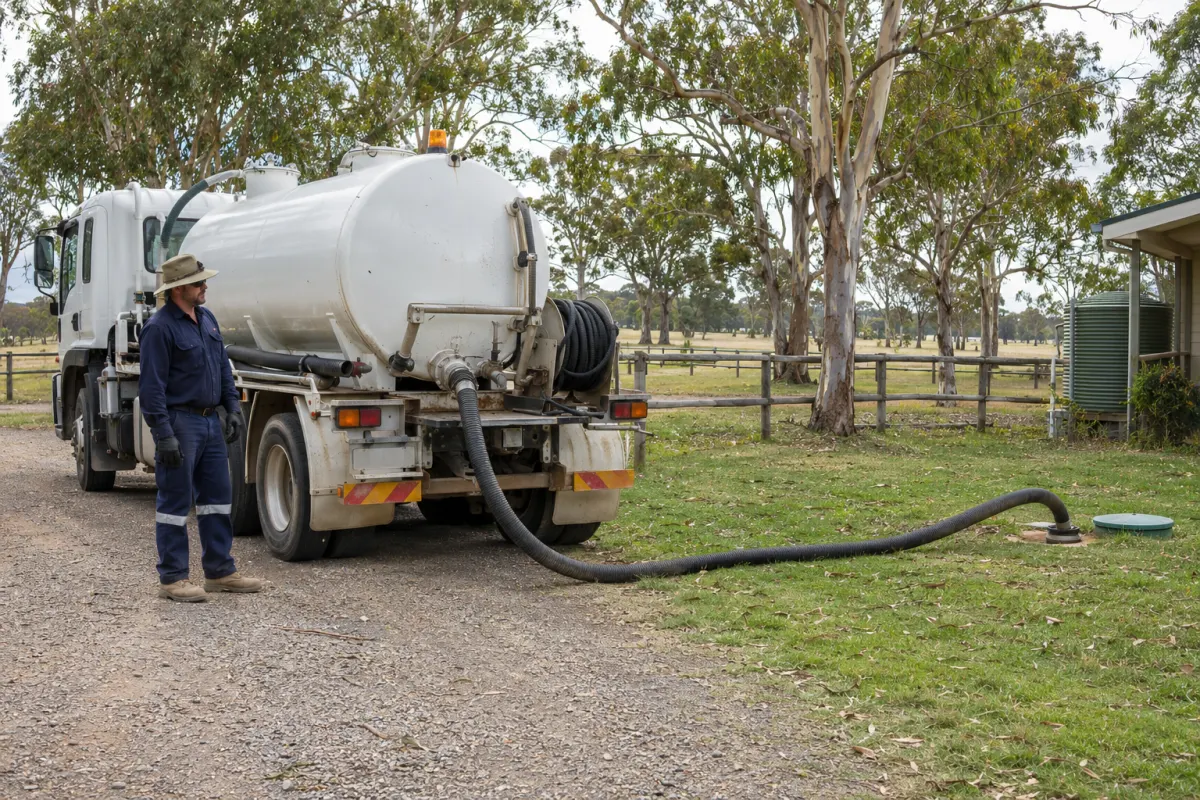
Allow for travel from the depot, setting up, finding and accessing the tank, the actual work and packing away. A long hose run or difficult lid changes the stop even if the tank volume matches another job.
Use recent completed visits to improve estimates. Where you have no history, leave room for uncertainty and ask the customer for the details that would change the plan. Don’t turn a guessed twenty-minute stop into a promise of an exact arrival time.
Account for breaks and the drive back. A run that ends at the last customer’s gate can look reasonable on a screen while leaving the crew with another hour before they’re home.
Plan disposal explicitly
Check the vehicle’s capacity against the expected collection, using the records and operating procedures your business relies on. Include the facility you intend to use, its access requirements and its opening hours.
The unloading stop takes time and may change the best order. A route tool that only sorts customer addresses won’t know that unless the disposal stop and its constraints are represented. Confirm whether your chosen software actually models them or whether dispatch must do that check separately.
Have a fallback for the facility being unavailable. The crew should know who authorises a change and where to record the actual disposal. Don’t leave the office reconciling a docket against a run that only shows the original plan.
Group, then check the road
Group flexible work by area and sensible day length. Next, compare the driving order with the actual roads. Rivers, bridges and vehicle access can make two nearby map pins a poor pairing.
Lock time-sensitive stops before trying a different order. Check that the revised run still honours the customer’s access window and leaves enough time at the preceding job. Driving minutes saved are no help if the truck arrives before the gate can open.
Before dispatch, read the run as the driver will: first address, entrance, job instructions, hazards, contact and what to do if access fails. Our dispatch handover checklist covers the information that should travel with it.
Leave somewhere for changes to land
A small amount of recoverable time is more useful than a fully packed day that needs rebuilding after one difficult tank. Know which flexible jobs can move if an urgent septic job comes in.
When a stop doesn’t get done, record why and return it to a visible planning queue. Contact the customer before promising a replacement day. Next morning, review the leftovers before adding another round of new work.
Planning in Rangefront Waste
Build runs groups waiting bookings and recurring drafts into nearby runs, with controls for stops, day length and distance. Dispatch checks the groups, moves stops where needed and chooses the day, technician and vehicle before scheduling.
Initial grouping uses straight-line distances. Once scheduled, the route optimiser can check the order using road distances, with locked stops kept in place. Dispatch still needs to check access, vehicle capacity and disposal arrangements rather than assuming a grouped run has settled them.
See the septic pumping software workflow for the field and billing steps. The runs documentation explains how pending work, leftover stops and optimisation fit together.